
Instrumenty optyczne

Latarka laserowa ładowana przez USB – mocna wiązka światła o dużym zasięgu, wskaźnik prezentacyjny, oświetlenie do polowań na świeżym powietrzu (regulowana ostrość, idealna na prezent)

Stacja lutownicza Stojak z lupą spawalniczą Zacisk zaciskowy Trzecia ręka pomocna lupa biurkowa Narzędzie do naprawy lutowania

Poziomica laserowa 3D z 12 liniami i 4D z 16 liniami – wysoce precyzyjne automatyczne poziomowanie do montażu płytek, ścian i podłóg

72LED 8X/10X NOWA podświetlana lupa USB 3 kolory LED Lupa do lutownicy Naprawa/Lampa stołowa/Pielęgnacja skóry Piękno

16-liniowy poziom laserowy z obrotową podstawą – samopoziomujący laser krzyżowy do wyrównywania ścian, układania płytek i prac budowlanych

5-liniowy samopoziomujący laser krzyżowy z zieloną wiązką, podstawą magnetyczną i mocowaniem na statywie – precyzyjny laser krzyżowy do prac budowlanych i majsterkowania

16-liniowy miniaturowy samopoziomujący laser z zieloną wiązką – projektor krzyżowy do użytku wewnątrz i na zewnątrz, do wyrównywania ścian i podłóg

4D 16-liniowy samopoziomujący laser, precyzyjne narzędzie do wyrównywania powierzchni płytek podłogowych i montażu na ścianie z zieloną wiązką.
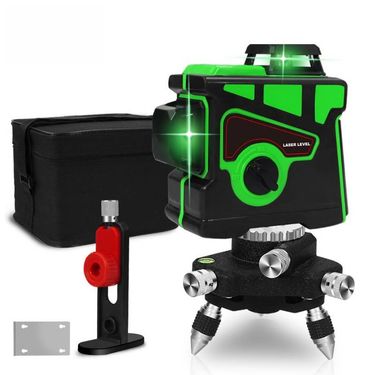
12-liniowa samopoziomująca poziomica laserowa z wiązką podczerwieni do precyzyjnego wyrównywania – do prac budowlanych, remontowych i projektów DIY wewnątrz i na zewnątrz

12-liniowy samopoziomujący laser – wysoce precyzyjny zielony promień z obrotową podstawą magnetyczną i automatycznym włączaniem/wyłączaniem do wyrównywania ścian i podłóg

16-liniowy, 4-wymiarowy, samopoziomujący laser z zieloną wiązką – precyzyjne narzędzie do wyrównywania płytek podłogowych, paneli ściennych i projektów budowlanych

16-liniowa poziomica laserowa – wysoce precyzyjna samopoziomująca poziomica krzyżowa z podstawą magnetyczną i obrotem o 360° do wyrównywania ścian i podłóg

Profesjonalna samopoziomująca laserowa poziomica krzyżowa z 16 liniami i 12 liniami oraz zielonym promieniem do wyrównywania ścian i prac budowlanych

Uniwersalny uchwyt ścienny do poziomicy laserowej – wytrzymała, regulowana podstawa statywu z obrotem 360° dla precyzyjnego ustawienia

12-liniowa poziomica laserowa z zielonym promieniem krzyżowym – kompaktowe narzędzie do poziomowania na zewnątrz i wewnątrz, o wysokiej widoczności i magnetycznej podstawie

5-liniowy zielony poziom laserowy – wysoce precyzyjny laser krzyżowy do zastosowań zewnętrznych z konstrukcją odporną na wstrząsy (profesjonalna klasa do prac budowlanych i remontowych)

Obrotowa o 360° aluminiowa platforma poziomująca – precyzyjny stół warsztatowy z automatycznym poziomowaniem do niwelatorów laserowych i instrumentów geodezyjnych

Samopoziomujący laser zielony – narzędzie do wyrównywania linii krzyżowych 12/16 do montażu na ścianie, układania płytek i prac budowlanych

Kompaktowa aluminiowa latarka LED – ultrajasna, zasilana bateriami AAA, wodoodporna, obrotowa o 360°, zasięg 50–100 m, idealna na kemping, wędrówki i do nagłych wypadków

Latarka taktyczna ABS z białym laserem i wyświetlaczem cyfrowym – 1200 mAh, ładowalna przez USB-C, dioda LED 3 W, wiązka światła 200–500 m
Every backpaLaser and Optical Measuring Tools
Most people don’t start looking for laser and optical measuring tools because they love gadgets. They start because guessing stops working. Distances feel “about right,” measurements look “close enough,” and then something doesn’t line up—the shot misses, the cut is off, or the setup takes twice as long to fix.
That moment is where optical and laser-based tools earn their place. Not by being complex, but by removing uncertainty from decisions that depend on distance, alignment, and scale.
Why Optical Measurement Feels Different From Manual Guessing
Traditional measuring methods rely heavily on positioning, visibility, and human judgment. Tape measures bend. Angles shift. Long distances become harder to estimate accurately with the naked eye.
Laser and optical tools solve this by turning distance into data. A laser beam doesn’t guess. An optical sensor doesn’t rely on perspective. Whether you’re measuring across open ground, checking alignment, or confirming spacing, the result is immediate and repeatable—two things manual methods struggle to provide consistently.
That reliability is why these tools appear in very different contexts, from outdoor sports to home projects.
Golf Rangefinders: Precision Where Small Errors Matter
A golf rangefinder is one of the most familiar optical tools, but its value goes beyond the fairway. In golf, a few meters can change club selection, swing approach, and overall strategy. Rangefinders remove the guesswork by providing exact distances to flags, hazards, or landmarks.
This level of accuracy makes them a natural extension of modern golf equipment, where performance depends as much on information as on technique. Instead of pacing distances or relying on course markers, players can focus on execution, confident that the numbers are right.
Digital Tape Measures: Familiar, But Smarter
For closer-range tasks, a digital tape measure offers a bridge between traditional tools and modern precision. It keeps the tactile simplicity of a tape while adding digital readouts, memory functions, and clearer visibility.
This is especially useful in situations where repeated measurements are needed, or where reading small markings becomes inconvenient. Digital displays reduce reading errors and speed up workflow, making them practical for both occasional use and more frequent measurement tasks.
Outdoor Use: When Conditions Aren’t Controlled
Optical tools also shine outdoors, where lighting, terrain, and distance make manual measuring unreliable. In open environments, laser tools can measure far beyond the reach of standard tapes without physical contact.
That’s why these tools often appear alongside hunting gear, where understanding distance can affect safety, positioning, and decision-making. In these scenarios, accuracy isn’t just about convenience—it directly affects outcomes.
Designed for Portability and Real Use
One common misconception is that optical tools are bulky or fragile. In reality, most modern designs prioritize portability. Compact housings, protective coatings, and simple interfaces make them easy to carry, store, and operate without specialized training.
Battery efficiency and quick activation also matter. Tools that take too long to set up or calibrate tend to get left behind. The best laser and optical measuring tools are those that fit naturally into existing routines rather than disrupting them.
Accuracy as a Shared Value Across Categories
What connects such different uses—golf, outdoor activities, DIY tasks—is the desire for confidence. The same mindset that appreciates a clean measurement also values well-made objects in everyday life. It’s not surprising that people drawn to precision tools often care about balance and design in unrelated categories, whether that’s functional sports gear or even lifestyle items like barware sets, where proportion and measurement affect the final result.
Precision, after all, isn’t limited to one activity—it’s a habit.
Choosing the Right Tool for Your Needs
Rather than focusing on technical specifications alone, it helps to think about how and where you’ll use the tool:
Will you measure long distances or close-range details?
Do you need fast readings or stored measurements?
Is portability more important than maximum range?
Answering these questions naturally narrows down the right option, without overcomplicating the choice.
Measurement That Supports Better Decisions
Laser and optical measuring tools aren’t about perfection—they’re about clarity. They remove uncertainty from situations where estimates fall short and make outcomes more predictable.
Whether you’re lining up a shot, checking a distance, or confirming a layout, accurate measurement turns hesitation into confidence. And once you’ve experienced that reliability, it’s hard to go back to guessing.
 4.4 na 5 na podstawie 9,249 opinii