
Klucze

Zestaw kluczy grzechotkowych z 72 zębami i szybką regulacją – napęd 1/2", 3/8", 1/4" ze stali chromowo-wanadowej, rozsuwany klucz grzechotkowy

Zestaw kluczy grzechotkowych dwugłowicowych SCO z plastikową skrzynką narzędziową – trwałe narzędzia ręczne dla mechaników i majsterkowiczów

Narzędzia ręczne Grzechotka Szybka naprawa maszyn Woda i elektryczność Łazienka Klimatyzacja Pięć w jednym Klucz 10-calowy

Wielofunkcyjny klucz dwugłowicowy z poziomicą, ręczne narzędzia do naprawy kranów, rur i toalet w domu

Narzędzie do usuwania zerwanych rur - Narzędzie do usuwania zerwanych kranów Regulowany wyciągacz zerwanych śrub i uszkodzonych śrub
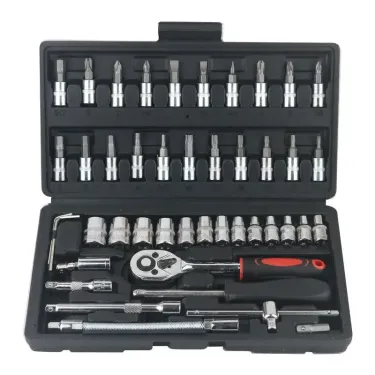
Zestaw narzędzi do naprawy samochodu 46 sztuk Zestaw nasadek 1/4 cala Zestaw narzędzi do naprawy samochodu Klucz dynamometryczny z grzechotką Zestaw do naprawy samochodu Narzędzie mechaniczne

Klucz nasadowy, 12-częściowy zestaw narzędzi wielofunkcyjnych, zestaw grzechotek do szybkiej konserwacji samochodu, zestaw kluczy grzechotkowych Quick Wrench

Wytrzymały, regulowany klucz typu F – kute narzędzie ze stali stopowej CR-V klasy przemysłowej zapewniającej maksymalny chwyt i trwałość

Zestaw profesjonalnych nasadek udarowych z przedłużką – nasadki imbusowe 8-34 mm do kluczy elektrycznych, wiertarek i pistoletów pneumatycznych – wytrzymały zestaw narzędzi

Wielofunkcyjny klucz grzechotkowy z przedłużaczem – uniwersalny klucz grzechotkowy z długim uchwytem i podwójnym zakończeniem, ze stali wysokowęglowej

15-częściowy zestaw kluczy dynamometrycznych dwustronnych – ultracienkie, precyzyjnie polerowane ze stali nierdzewnej, imbusowe i płaskie do majsterkowania i napraw samochodowych

Klucz płaski z pojedynczą głowicą, rozwarcie 4-30 mm, cienki, mały klucz jednostronny do uchwytu łazienkowego, narzędzie ręczne

Wielofunkcyjne klucze grzechotkowe mini 1/2 cala, 3/8 cala i 1/4 cala z kółkiem kciukowym, odpowiednie do ręcznych narzędzi naprawczych

Klucz imbusowy płaski z płaską kulką, narzędzie ręczne, uniwersalny, szybkoschnący, stal chromowo-wanadowa, sześciokątny, 2/2, 5/3/4/5/6/8/10 mm

72 zęby szybkie gniazdo Mini klucz z grzechotką 1/4 3/8 1/2 duża średnia i mała mucha dwukierunkowe rogi krótka rączka narzędzie do naprawy
Klucz płaski z pojedynczą głowicą, rozwarcie 4-30 mm, cienki, mały klucz jednostronny do uchwytu łazienkowego, narzędzie ręczne

1 szt. Narzędzie do naprawy sprzęgła 39 mm 41 mm Klucz dwugłowicowy Specyfikacja Wysokiej jakości materiał do skutera GY6 125 cm3

Klucz dynamometryczny z regulacją 1/4'', profesjonalny, mikrometr 5-25 Nm, narzędzie do demontażu samochodów, rowerów, motocykli, klucz ręczny

2-częściowy klucz kwadratowy do przełącznika krzyżowego, 4-drożny klucz wielofunkcyjny, uniwersalny klucz do szafki sterowniczej, klucz do otwierania szafki licznika wody i gazu elektrycznego

10-częściowy zestaw mini kluczy płasko-oczkowych metrycznych i SAE – stal chromowo-wanadowa, kompaktowy i wytrzymały, idealny do trudno dostępnych miejsc
Wrenches That Keep the Work Moving, Not Interrupt It
When a job slows you down, it’s rarely because you don’t have tools
It’s usually because you don’t have the right one.
You might start with good intentions. A loose bolt, a small adjustment, something you thought would take a few minutes. Yet halfway through, progress stalls. The angle is wrong. The space is tight. The bolt won’t turn unless you force it—and forcing it never feels like the smart option.
At that point, you’re not thinking about tool names or specifications. You’re thinking: there has to be a better way to turn this without damaging anything.
That’s exactly where a well-chosen set of wrenches changes the experience—not by doing anything dramatic, but by letting the work continue smoothly.
When Progress Slows Down, It’s Usually a Fit Problem
At first glance, a wrench looks simple. However, once you’re actually working, the differences show up quickly.
For instance, when dealing with furniture, bikes, or compact equipment, fasteners are often recessed or flush with the surface. In those moments, allen wrenches quietly do the heavy lifting. They don’t demand much attention, but when the fit is precise, you immediately feel the difference. The screw holds, the wrench doesn’t slip, and you’re no longer worried about rounding edges before the job is done.
On the other hand, when space becomes the real limitation—not force—you start wishing you didn’t have to lift and reset your tool after every turn. That’s usually when ratchet wrenches earn their keep. The motion stays continuous, the rhythm unbroken. Instead of fighting the environment, you adapt to it, and suddenly even awkward angles feel manageable.
Still, there are moments when speed isn’t the priority at all. Tightening a bolt too much can cause more problems than leaving it loose. In these situations, guessing isn’t reassuring. This is where torque wrenches step in—not to make things faster, but to make them certain. You stop relying on feel alone and start trusting consistency, which matters more than most people realize.
Different Jobs Ask for Different Control
Interestingly, frustration often doesn’t come from turning bolts—it comes from stopping mid-task.
You reach a point where a fastener is set, but the next step requires a small adjustment, maybe tightening something nearby or correcting alignment. Switching constantly between tools breaks focus, especially when your hands are already busy.
That’s why many people naturally keep screwdrivers within reach. Not because they’re related tools, but because real tasks rarely involve just one motion. Turning, tightening, adjusting—these actions flow together when the right tools are nearby.
Sometimes, the interruption is even simpler: packaging needs cutting, insulation needs trimming, or a quick clean edge makes the next step easier. In those moments, having knives close isn’t about convenience—it’s about staying in the zone instead of walking away from the work.
Why Smooth Organization Matters
As projects get longer, another truth becomes obvious: discomfort slows you down just as much as resistance.
A wrench that bites into your palm or slips under pressure forces you to stop more often than you expect. Meanwhile, a balanced tool with a comfortable grip lets you work longer without thinking about your hands at all—which is exactly how it should be.
The same logic applies to how tools are stored. When everything is scattered, half the job becomes searching. That’s why a tool roll bag feels less like storage and more like a workflow upgrade. You see what you have, you grab what you need, and nothing interrupts your momentum. Whether you’re moving between rooms or packing tools for later, that sense of order quietly supports the work.
Good Wrenches Remove Friction
The best wrenches don’t announce themselves. They simply fit, turn, and get out of the way. They let you focus on the task instead of the tool. And once you’ve experienced that—when a job finishes without stripped bolts, sore hands, or unnecessary pauses—it becomes hard to accept anything less.
If you’ve ever felt work slow down for no obvious reason, it’s often not your skill.
It’s the missing link between your hands and the task—and that link is usually the right wrench, used at the right moment.